

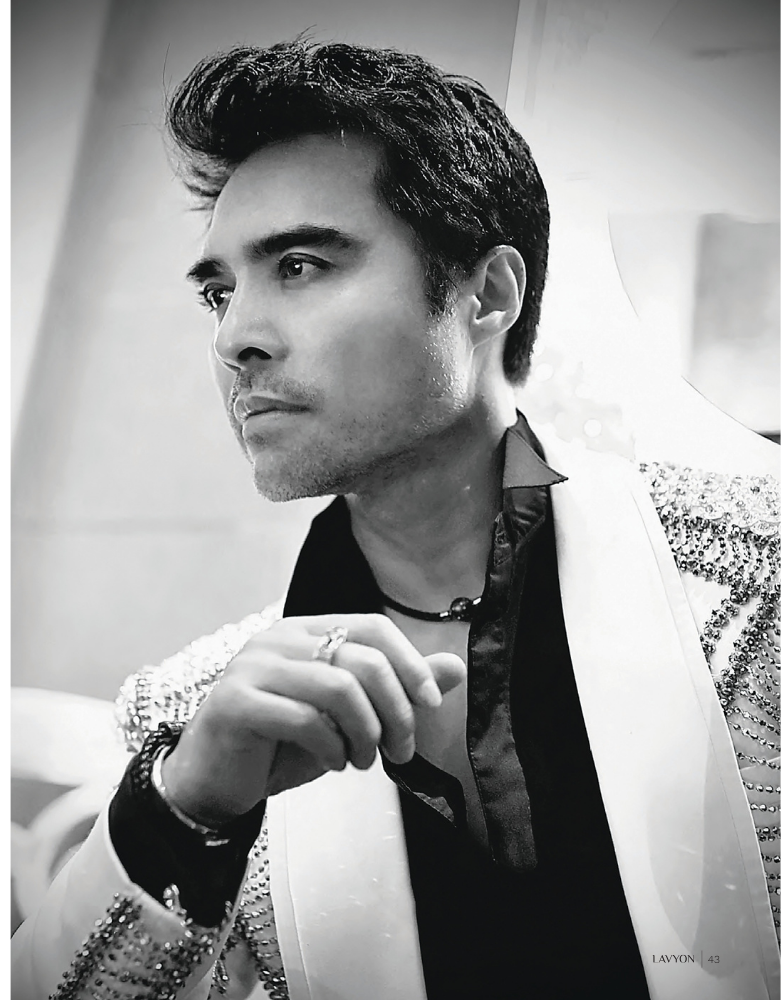
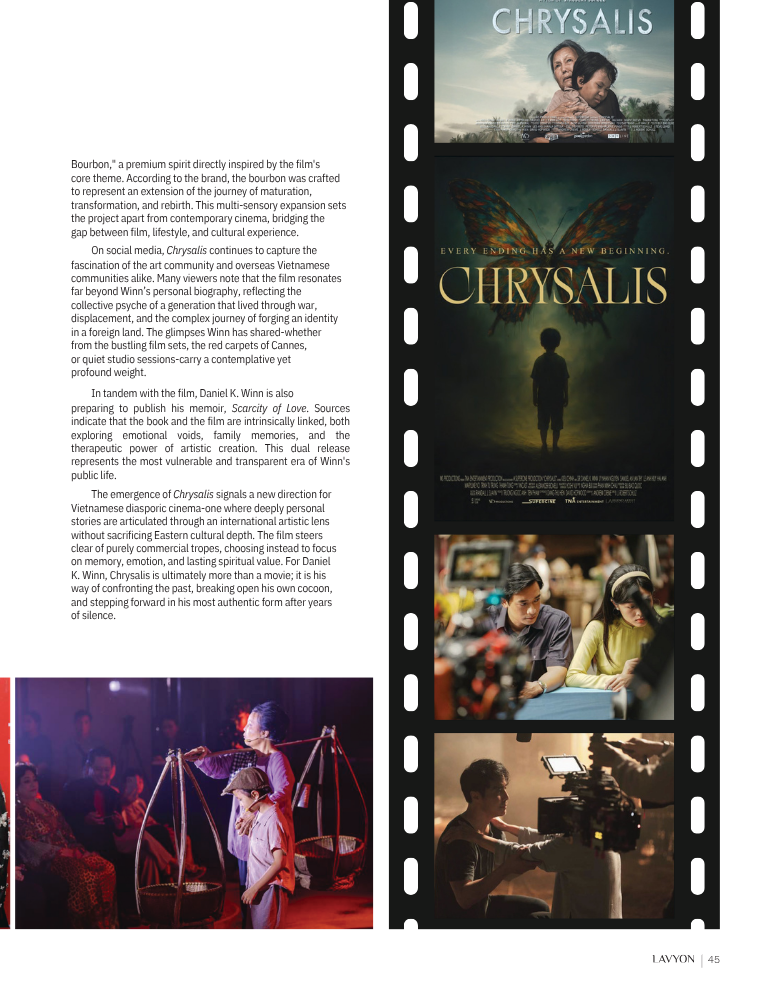
 Amidst a growing wave of international cinema focused on personal narratives and cultural identity, Chrysalis emerges as a truly singular piece of work. Far more than a standard feature film, it serves as a profound mosaic of memory, art, and rebirth. It chronicles the life of a Vietnamese-American individual who navigated the tremors of war, loss, and profound isolation to become one of the most influential artists in the United States. Behind this ambitious project is Daniel K. Winn, a renowned painter, sculptor, and entrepreneur who has chosen cinema as his latest canvas to retell his life story through a language of imagery and deep emotion.

The title Chrysalis refers to the pupal stage of a caterpillar just before it completes its transformation into a butterfly. This serves as the overarching metaphor for Daniel K. Winn’s actual life. Born in Bien Hoa in 1966, he endured the harrowing aftermath of war and a childhood of scarcity raised by his grandmother in Vietnam, before stepping into an entirely different reality upon immigrating to the United States. For decades, those lingering memories of poverty, loneliness, and an innate yearning for affection became the very fuel that sustained his artistic endeavors.
Chrysalis is constructed directly from Winn’s real-life experiences. Rather than dramatizing his hardships for cheap, tragic effect, the film dives deep into his internal emotional landscapes, where childhood memories, war, family dynamics, and art intertwine. Daniel K. Winn has shared that his goal is for audiences to understand exactly why he became an artist, and why his works—while surreal and haunting—are always fundamentally anchored in the beauty of healing.
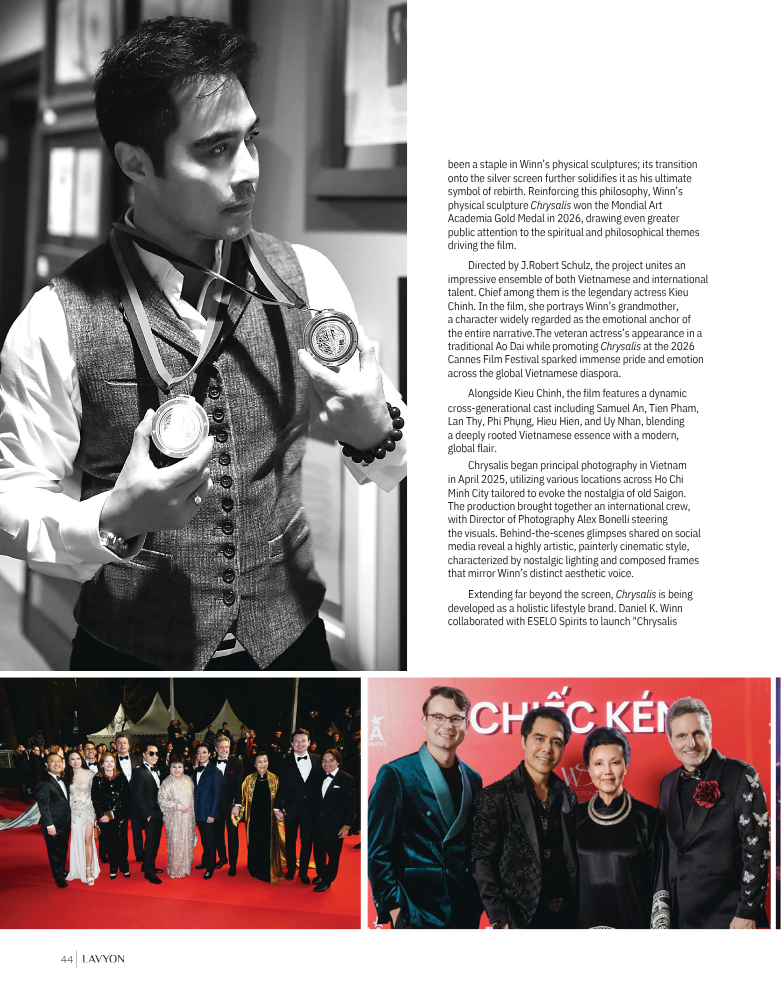
What sets Chrysalis apart is that it transcends conventional filmmaking. The project operates as a multi-layered artistic ecosystem where fine art, sculpture, cinema, and literature coexist. The image of the chrysalis has long been a staple in Winn’s physical sculptures; its transition onto the silver screen further solidifies it as his ultimate symbol of rebirth. Reinforcing this philosophy, Winn’s physical sculpture Chrysalis won the Mondial Art Academia Gold Medal in 2026, drawing even greater public attention to the spiritual and philosophical themes driving the film.
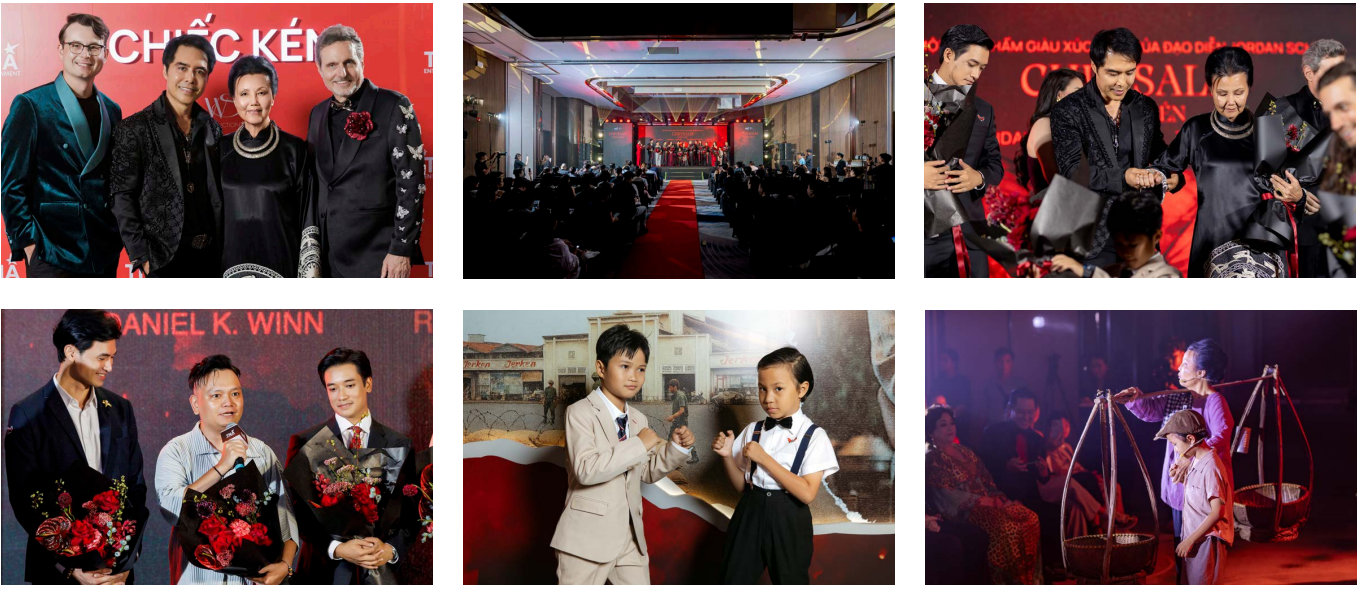
Directed by J.Robert Schulz, the project unites an impressive ensemble of both Vietnamese and international talent. Chief among them is the legendary actress Kieu Chinh. In the film, she portrays Winn’s grandmother, a character widely regarded as the emotional anchor of the entire narrative.The veteran actress’s appearance in a traditional Ao Dai while promoting Chrysalis at the 2026 Cannes Film Festival sparked immense pride and emotion across the global Vietnamese diaspora.

Alongside Kieu Chinh, the film features a dynamic cross-generational cast including Samuel An, Tien Pham, Lan Thy, Phi Phụng, Hieu Hien, and Uy Nhan, blending a deeply rooted Vietnamese essence with a modern, global flair.
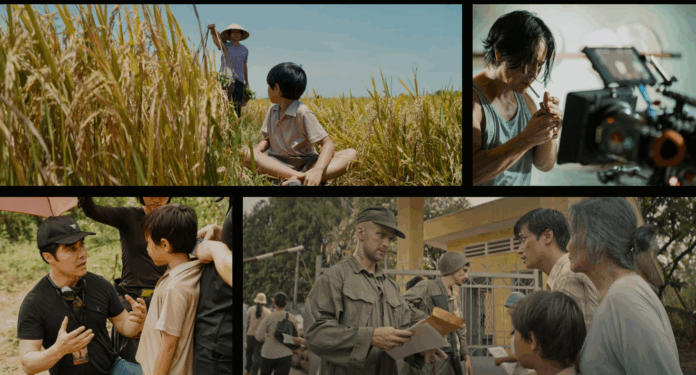
Chrysalis began principal photography in Vietnam in April 2025, utilizing various locations across Ho Chi Minh City tailored to evoke the nostalgia of old Saigon. The production brought together an international crew, with Director of Photography Alex Bonelli steering the visuals. Behind-the-scenes glimpses shared on social media reveal a highly artistic, painterly cinematic style, characterized by nostalgic lighting and composed frames that mirror Winn’s distinct aesthetic voice.
Extending far beyond the screen, Chrysalis is being developed as a holistic lifestyle brand. Daniel K. Winn collaborated with ESELO Spirits to launch “Chrysalis Bourbon,” a premium spirit directly inspired by the film’s core theme. According to the brand, the bourbon was crafted to represent an extension of the journey of maturation, transformation, and rebirth. This multi-sensory expansion sets the project apart from contemporary cinema, bridging the gap between film, lifestyle, and cultural experience.
On social media, Chrysalis continues to capture the fascination of the art community and overseas Vietnamese communities alike. Many viewers note that the film resonates far beyond Winn’s personal biography, reflecting the collective psyche of a generation that lived through war, displacement, and the complex journey of forging an identity in a foreign land. The glimpses Winn has shared—whether from the bustling film sets, the red carpets of Cannes, or quiet studio sessions—carry a contemplative yet profound weight.
In tandem with the film, Daniel K. Winn is also preparing to publish his memoir, Scarcity of Love. Sources indicate that the book and the film are intrinsically linked, both exploring emotional voids, family memories, and the therapeutic power of artistic creation. This dual release represents the most vulnerable and transparent era of Winn’s public life.
The emergence of Chrysalis signals a new direction for Vietnamese diasporic cinema—one where deeply personal stories are articulated through an international artistic lens without sacrificing Eastern cultural depth. The film steers clear of purely commercial tropes, choosing instead to focus on memory, emotion, and lasting spiritual value. For Daniel K. Winn, Chrysalis is ultimately more than a movie; it is his way of confronting the past, breaking open his own cocoon, and stepping forward in his most authentic form after years of silence.