
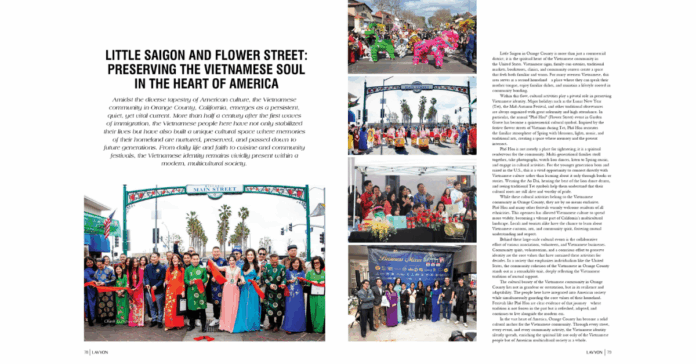

In the sprawling, sun-drenched landscape of Orange County, California, the Vietnamese community has established something far more profound than a demographic foothold. Over five decades since the first waves of immigration, they have cultivated a sophisticated cultural ecosystem—a quiet yet vital current that powers one of the most vibrant ethnic enclaves in the United States.
Little Saigon is no longer just a story of survival; it is a case study in thriving. What began as a necessity has evolved into a bustling commercial and spiritual capital for the Vietnamese diaspora. Here, family-run enterprises, traditional apothecaries, and culinary landmarks do not merely conduct business; they curate an environment of familiarity. For the overseas Vietnamese, this district serves as a second homeland—a sensory landscape where the cadence of the mother tongue and the aroma of traditional cuisine offer a tangible connection to roots left behind.
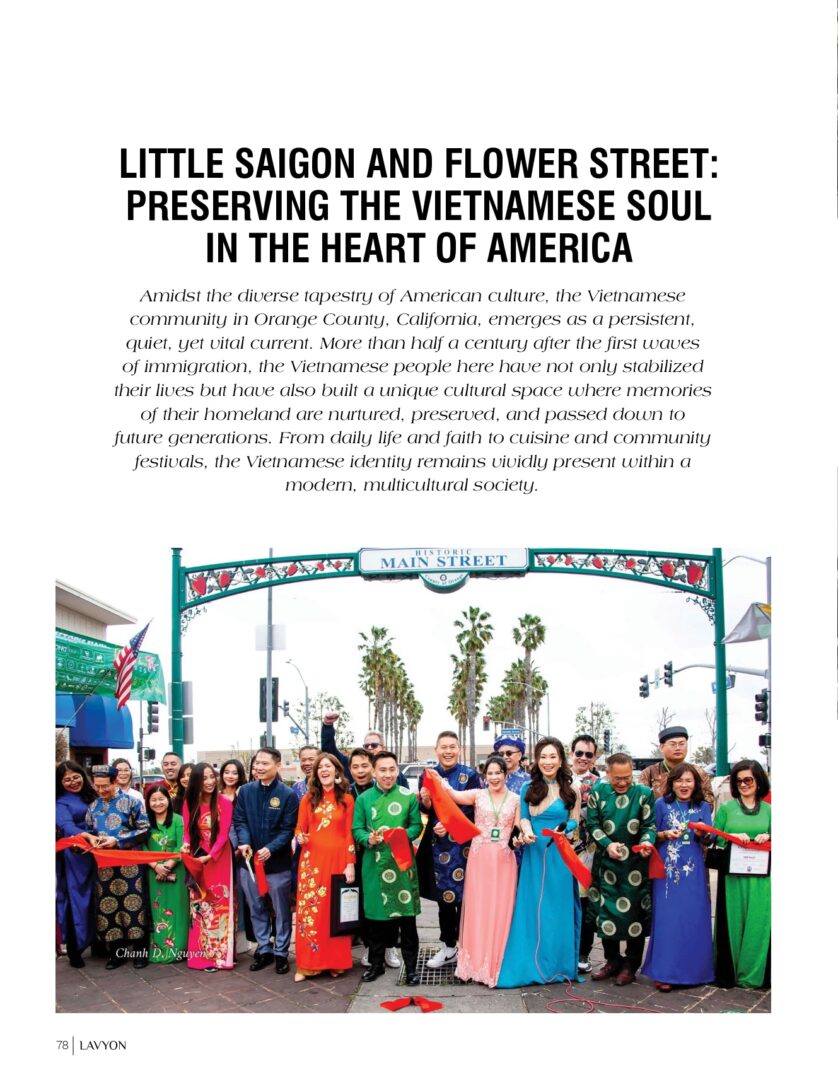
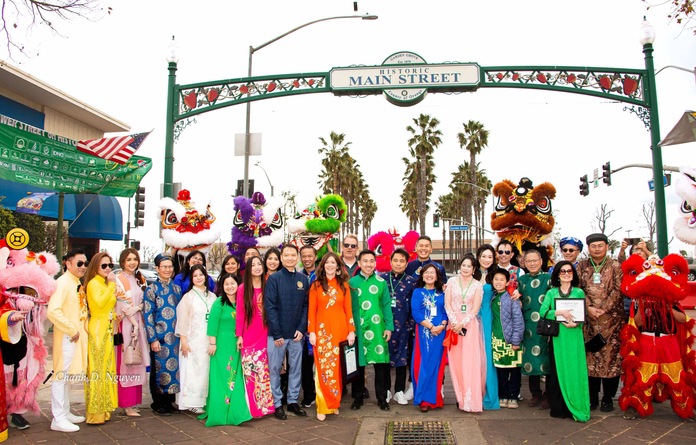 The Cultural Anchor: Flower Street Within this dynamic flow, cultural preservation acts as the community’s heartbeat. While the calendar is punctuated by solemn observances, it is the annual “Phố Hoa” (Flower Street) event in Garden Grove that stands as the quintessential symbol of this enduring identity.
Inspired by the iconic flower boulevards of Vietnam during Tet (Lunar New Year), Phố Hoa is a masterclass in atmospheric recreation. It transforms the California streetscape into a vivid tableau of Spring, complete with radiant blossoms, intricate lighting, and traditional arts. It is a space where memory intersects with the present—a sanctuary of shared joy that draws thousands not just to sightsee, but to reconnect.
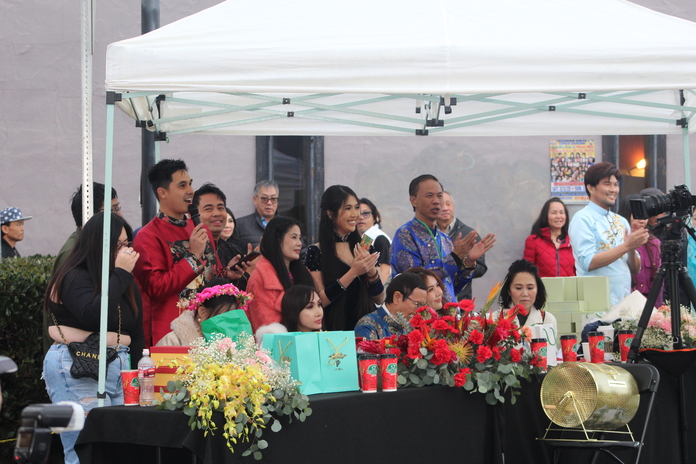
A Bridge Between Generations From a sociological perspective, Phố Hoa serves a critical function: it is a bridge between the past and the future. In a society that often prioritizes the new, this event offers a rare moment of intergenerational communion.
Grandparents walk alongside grandchildren born on American soil, sharing stories amidst the rhythmic beat of lion dance drums. For the younger generation, often removed from the history of their ancestors, this is not culture learned through textbooks; it is culture experienced viscerally. To don the Ao Dai and immerse oneself in the festivities is to understand that their heritage is not a relic, but a living, breathing source of pride.
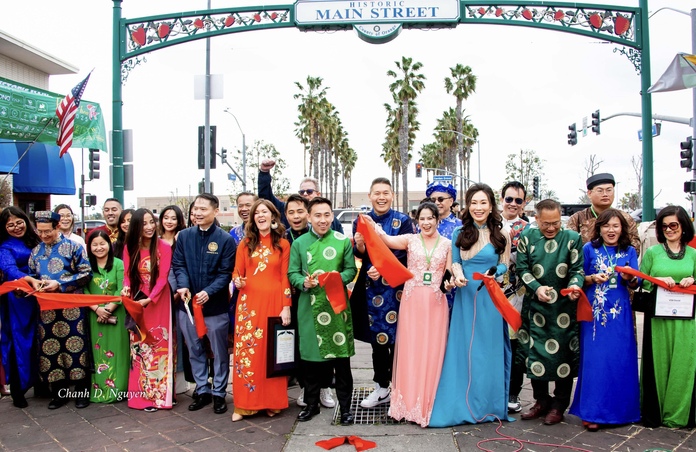
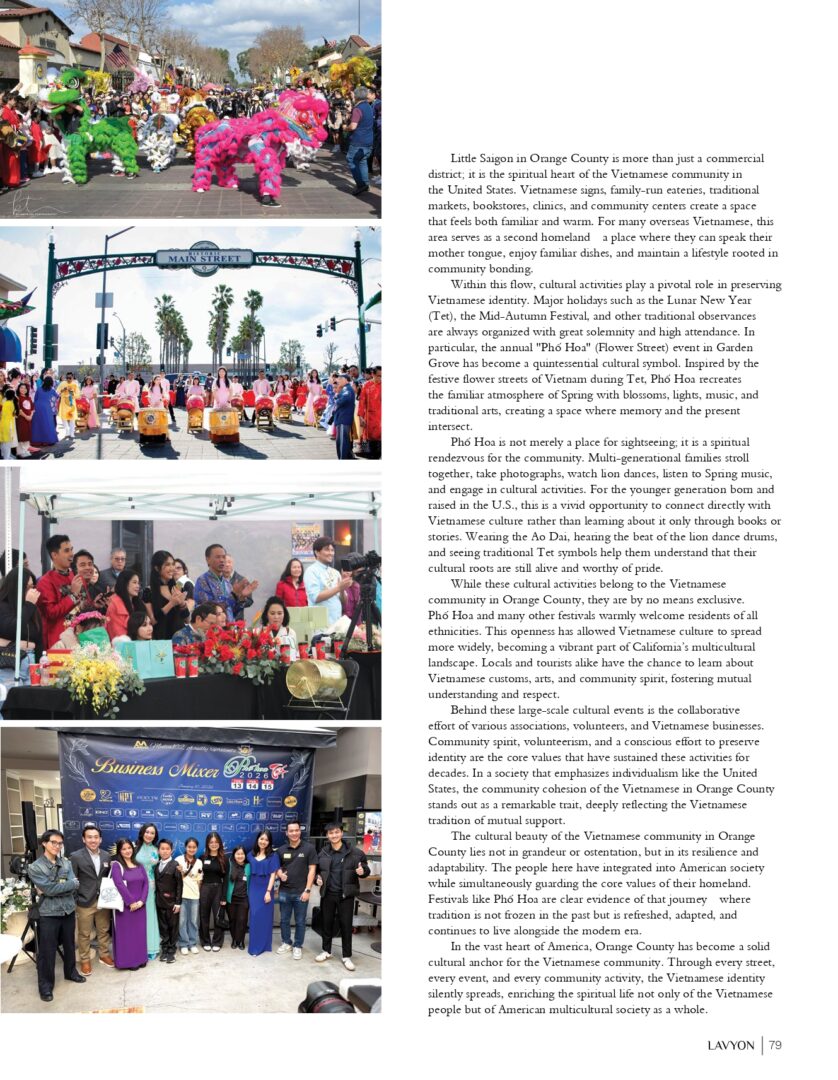
The Power of Collaboration Behind the spectacle lies a robust infrastructure of community effort. Phố Hoa is the result of a coordinated collaboration between business associations, volunteers, and civic leaders. This spirit of mutual support—a deep-seated Vietnamese value—remains a distinguishing trait of the community in an often individualistic American society.
Yet, this cultural fortress is not gated. Phố Hoa, much like Little Saigon itself, has opened its arms to the broader public. It has become a fixture in California’s multicultural calendar, inviting residents of all backgrounds to engage with Vietnamese customs. In doing so, the community exerts a form of “soft power,” fostering mutual respect and understanding through the universal language of celebration.
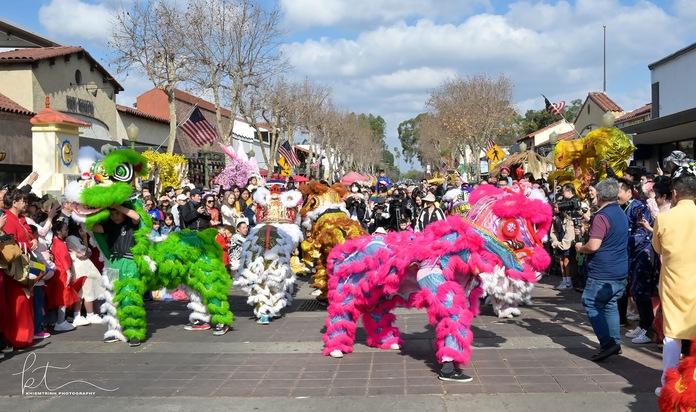
A Legacy of Resilience The true beauty of the Vietnamese community in Orange County lies not in ostentation, but in resilience and adaptability. They have successfully integrated into the fabric of American life without surrendering their core values. Events like Phố Hoa are proof that tradition need not be frozen in time; it can be refreshed, adapted, and made to thrive alongside the modern era.
In the vast heart of America, Orange County stands as a solid cultural anchor. Through every business opened and every festival held, the Vietnamese identity silently expands, enriching the spiritual and cultural wealth of the nation’s diverse tapestry.