
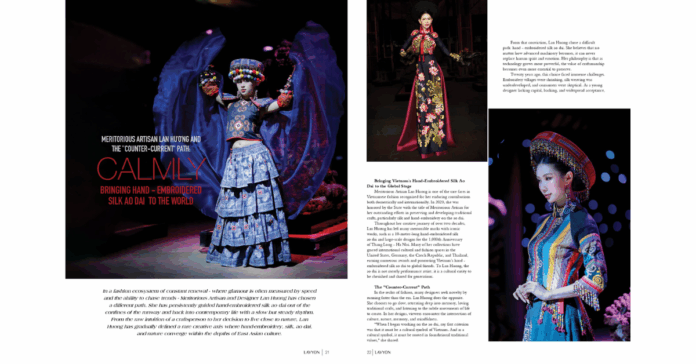

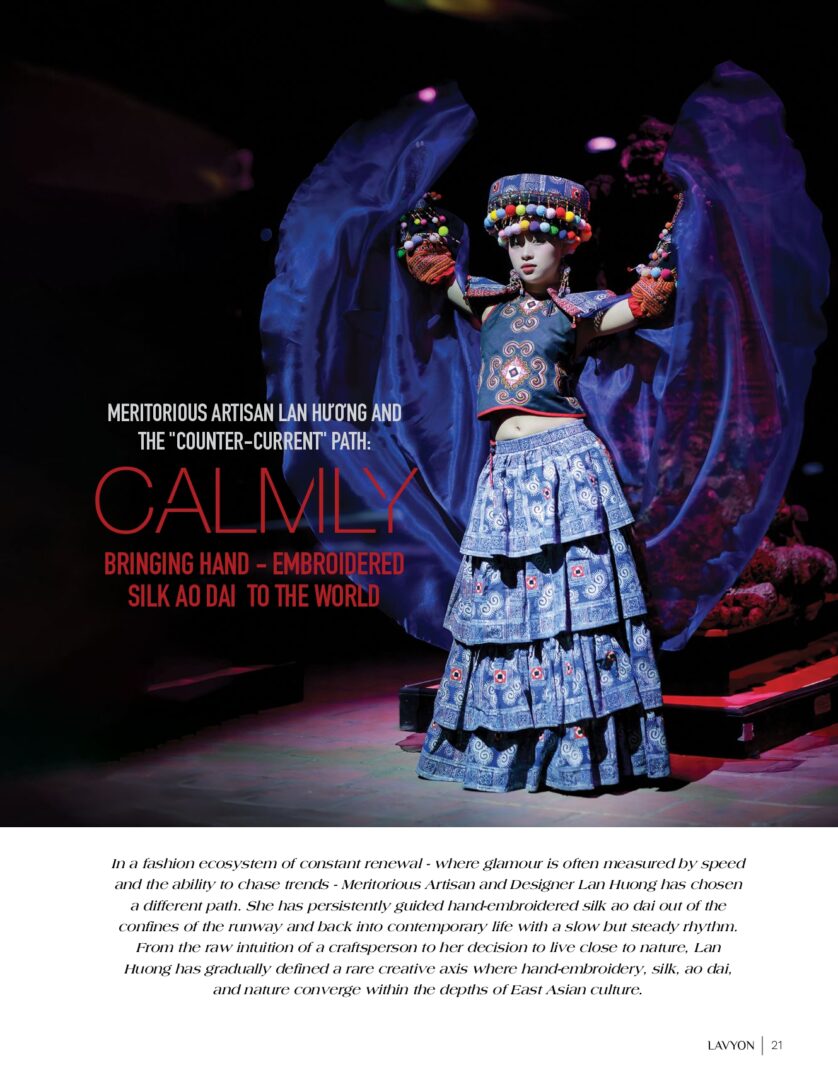
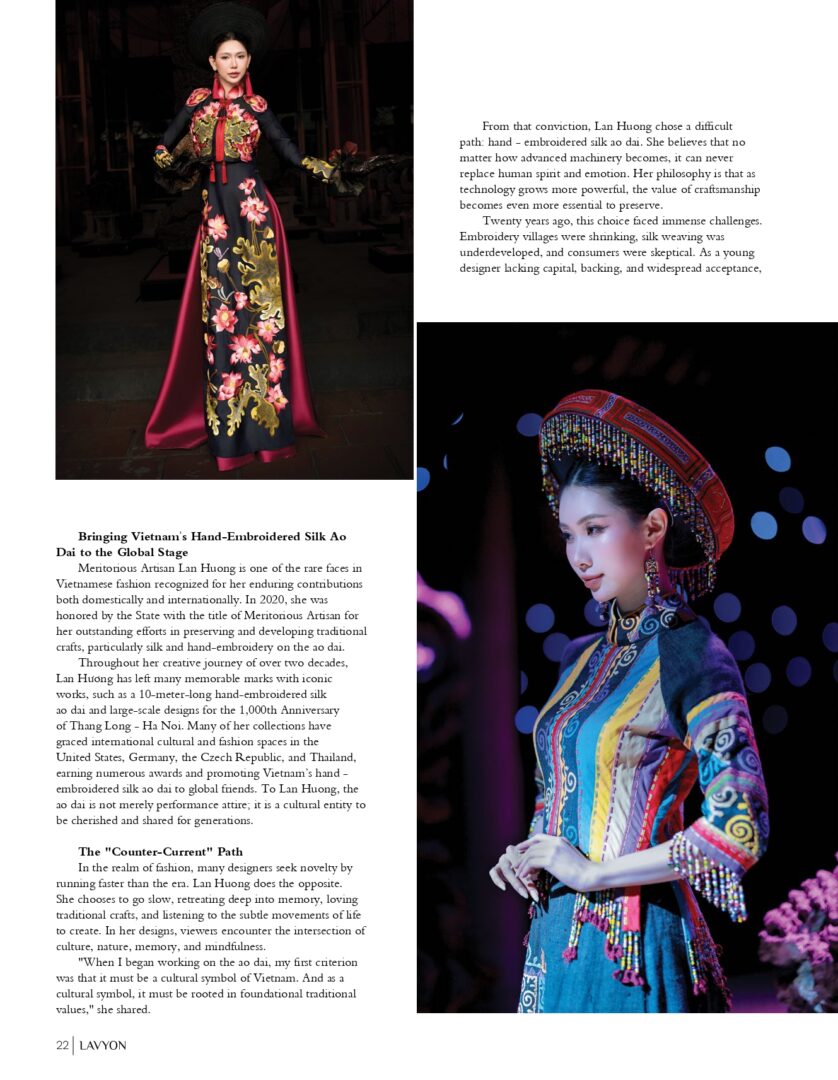
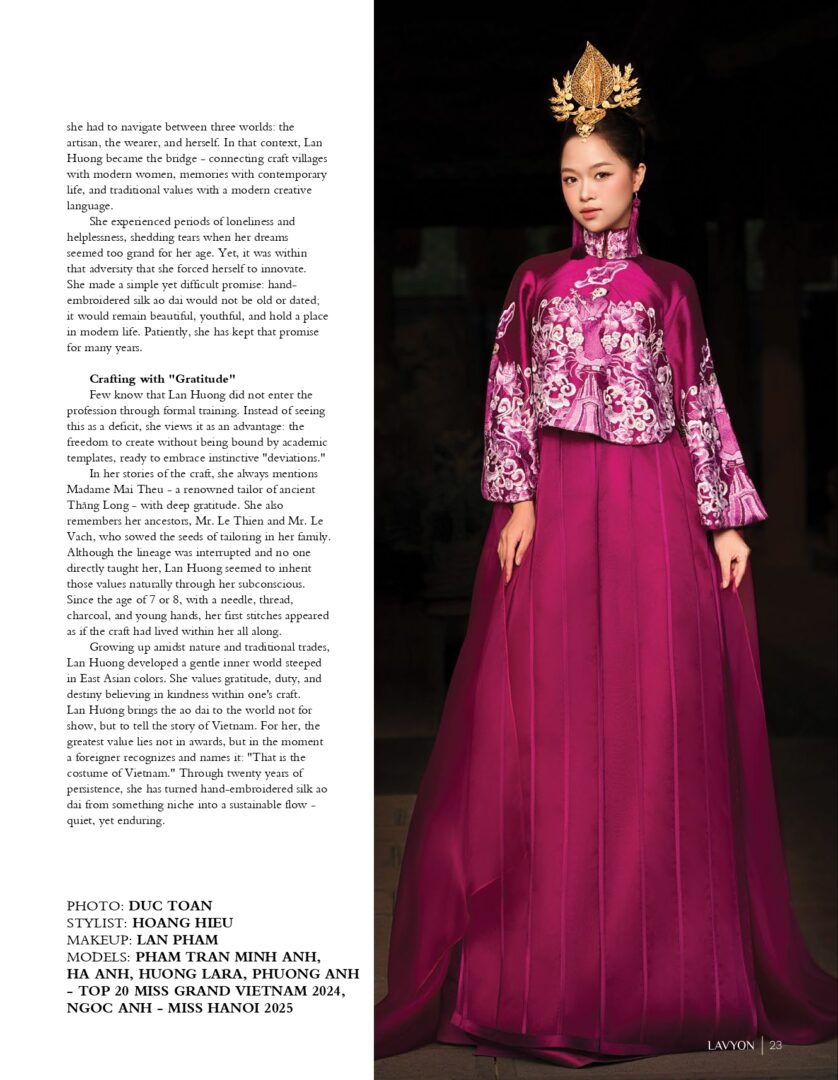
In a fashion ecosystem of constant renewal—where glamour is often measured by speed and the ability to chase trends—Meritorious Artisan and Designer Lan Hương has chosen a different path. She has persistently guided hand-embroidered silk áo dài out of the confines of the runway and back into contemporary life with a slow but steady rhythm. From the raw intuition of a craftsperson to her decision to live close to nature, Lan Hương has gradually defined a rare creative axis where hand-embroidery, silk, áo dài, and nature converge within the depths of East Asian culture.
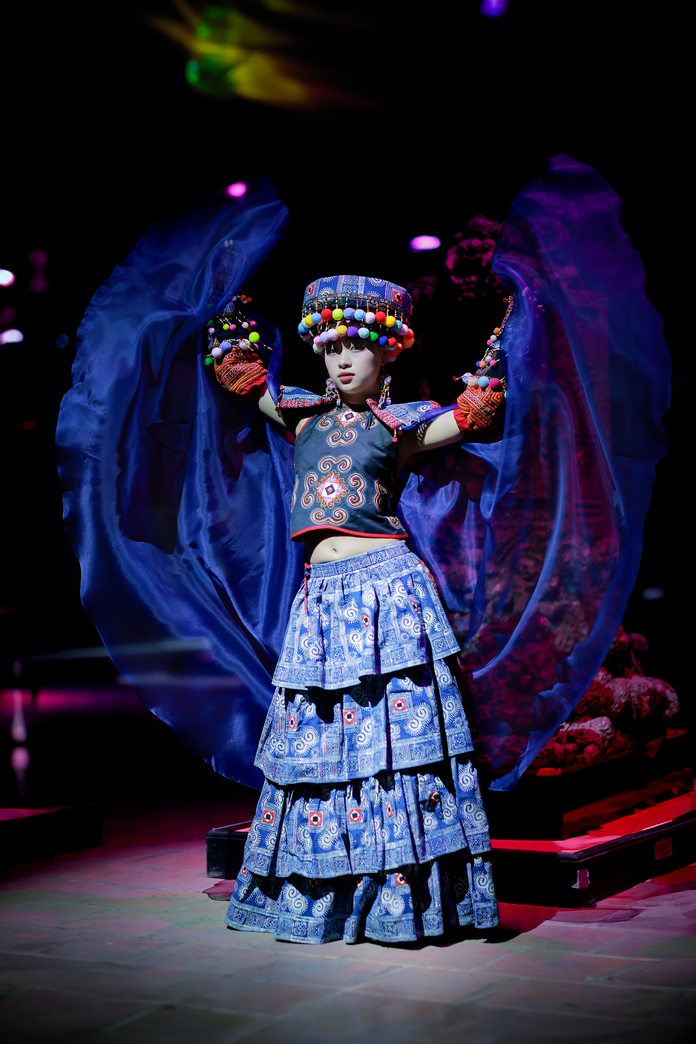
Meritorious Artisan Lan Hương is one of the rare faces in Vietnamese fashion recognized for her enduring contributions both domestically and internationally. In 2020, she was honored by the State with the title of Meritorious Artisan for her outstanding efforts in preserving and developing traditional crafts, particularly silk and hand-embroidery on the áo dài.
Throughout her creative journey of over two decades, Lan Hương has left many memorable marks with iconic works, such as a 10-meter-long hand-embroidered silk áo dài and large-scale designs for the 1,000th Anniversary of Thăng Long – Hà Nội. Many of her collections have graced international cultural and fashion spaces in the United States, Germany, the Czech Republic, and Thailand, earning numerous awards and promoting Vietnam’s hand-embroidered silk áo dài to global friends. To Lan Hương, the áo dài is not merely performance attire; it is a cultural entity to be cherished and shared for generations.
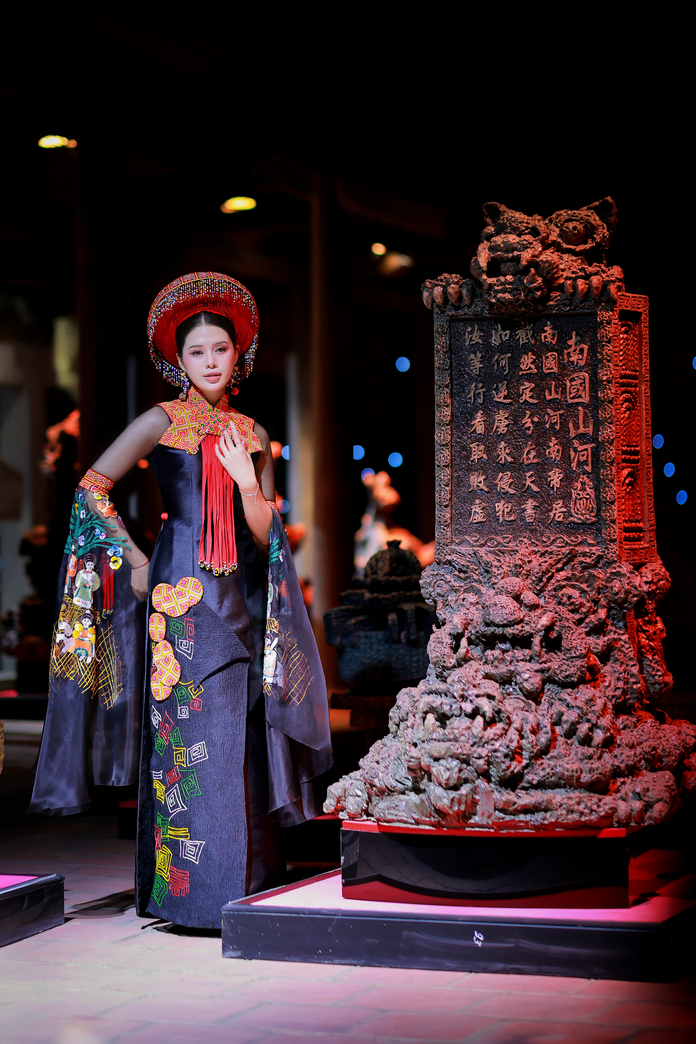
In the realm of fashion, many designers seek novelty by running faster than the era. Lan Hương does the opposite. She chooses to go slow, retreating deep into memory, loving traditional crafts, and listening to the subtle movements of life to create. In her designs, viewers encounter the intersection of culture, nature, memory, and mindfulness.
“When I began working on the áo dài, my first criterion was that it must be a cultural symbol of Vietnam. And as a cultural symbol, it must be rooted in foundational traditional values,” she shared.
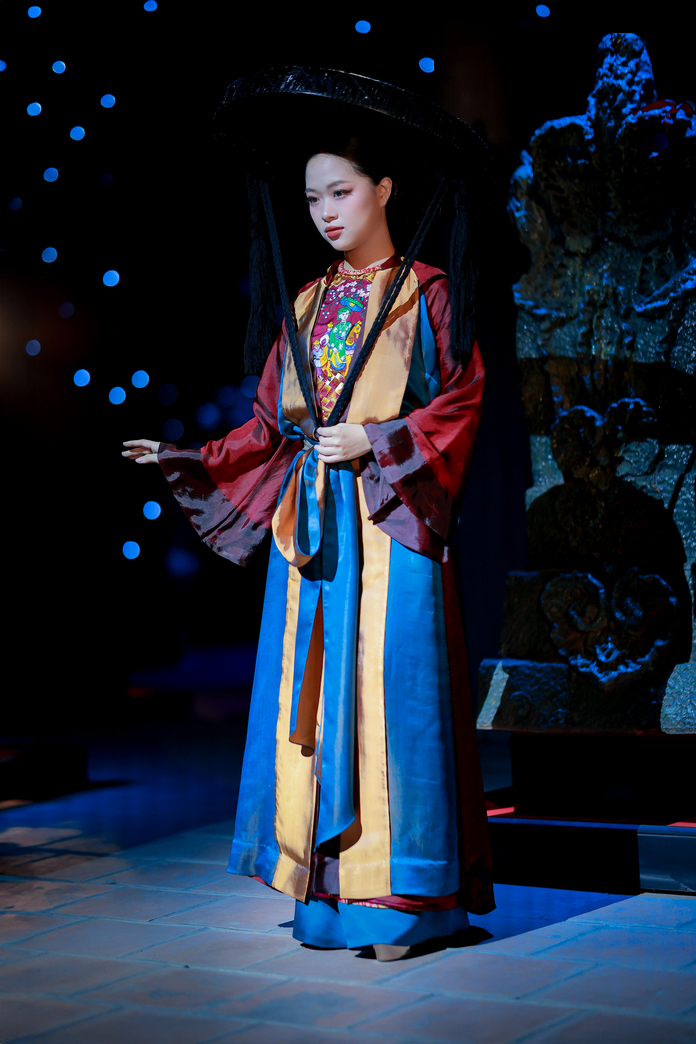
From that conviction, Lan Hương chose a difficult path: hand-embroidered silk áo dài. She believes that no matter how advanced machinery becomes, it can never replace human spirit and emotion. Her philosophy is that as technology grows more powerful, the value of craftsmanship becomes even more essential to preserve.
Twenty years ago, this choice faced immense challenges. Embroidery villages were shrinking, silk weaving was underdeveloped, and consumers were skeptical. As a young designer lacking capital, backing, and widespread acceptance, she had to navigate between three worlds: the artisan, the wearer, and herself. In that context, Lan Hương became the bridge—connecting craft villages with modern women, memories with contemporary life, and traditional values with a modern creative language.
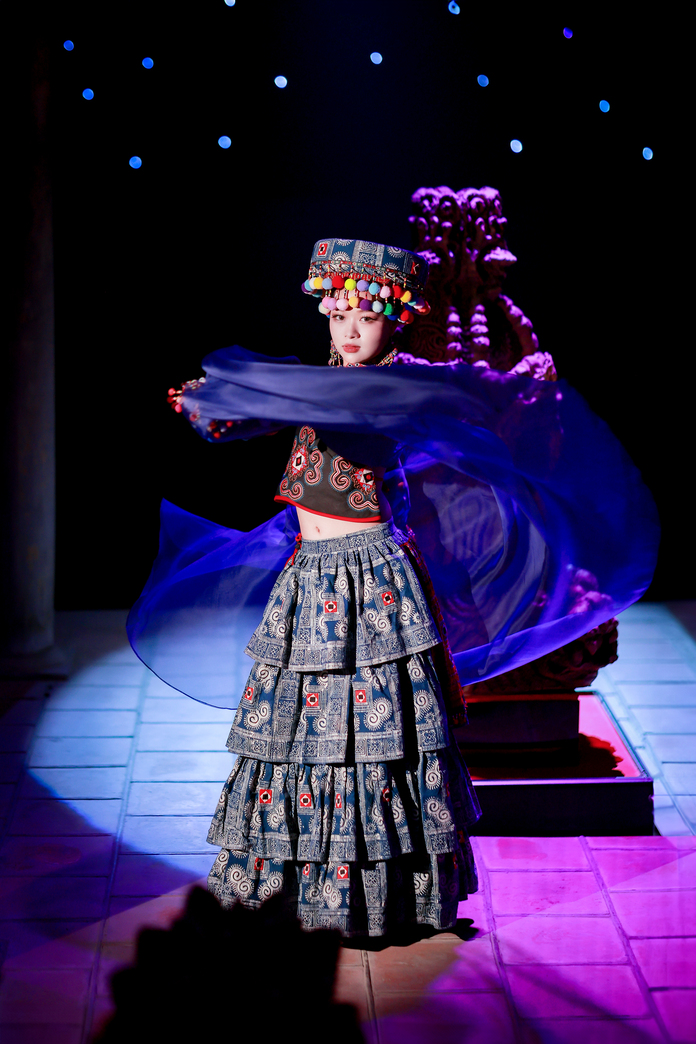
She experienced periods of loneliness and helplessness, shedding tears when her dreams seemed too grand for her age. Yet, it was within that adversity that she forced herself to innovate. She made a simple yet difficult promise: hand-embroidered silk áo dài would not be old or dated; it would remain beautiful, youthful, and hold a place in modern life. Patiently, she has kept that promise for many years.
Few know that Lan Hương did not enter the profession through formal training. Instead of seeing this as a deficit, she views it as an advantage: the freedom to create without being bound by academic templates, ready to embrace instinctive “deviations.”
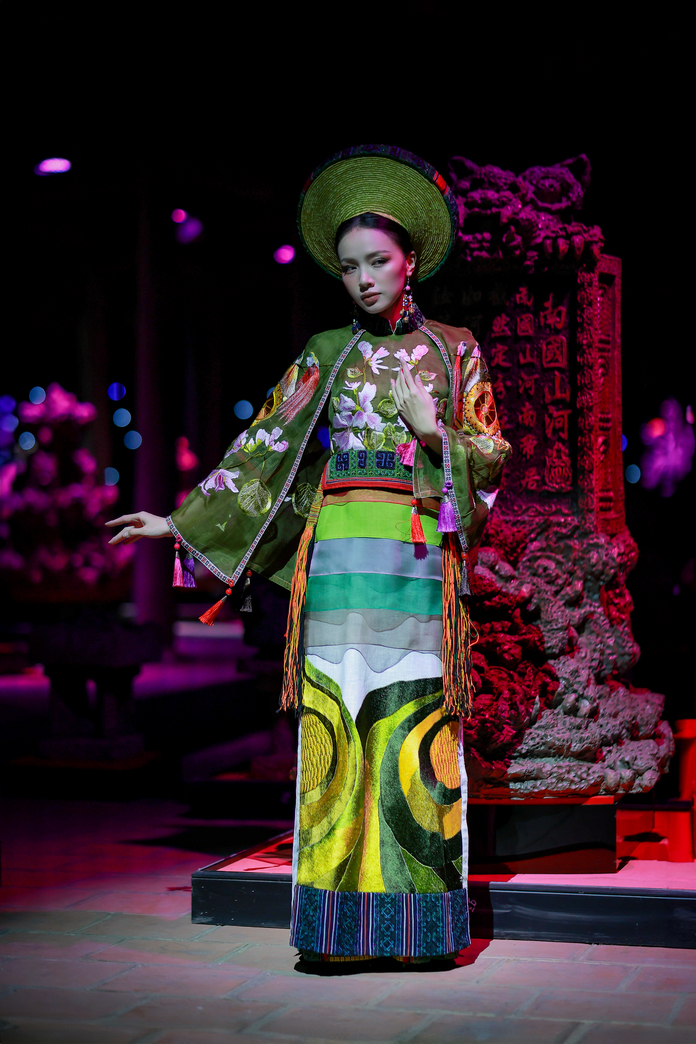
In her stories of the craft, she always mentions Madame Mai Thêu—a renowned tailor of ancient Thăng Long—with deep gratitude. She also remembers her ancestors, Mr. Lê Thiện and Mr. Lê Vạch, who sowed the seeds of tailoring in her family. Although the lineage was interrupted and no one directly taught her, Lan Hương seemed to inherit those values naturally through her subconscious. Since the age of 7 or 8, with a needle, thread, charcoal, and young hands, her first stitches appeared as if the craft had lived within her all along.
Growing up amidst nature and traditional trades, Lan Hương developed a gentle inner world steeped in East Asian colors. She values gratitude, duty, and destiny (ơn – nghĩa – duyên), believing in kindness within one’s craft. Lan Hương brings the áo dài to the world not for show, but to tell the story of Vietnam. For her, the greatest value lies not in awards, but in the moment a foreigner recognizes and names it: “That is the costume of Vietnam.” Through twenty years of persistence, she has turned hand-embroidered silk áo dài from something niche into a sustainable flow—quiet, yet enduring.